
How to Choose the Best Electric Scooter for Urban Mobility
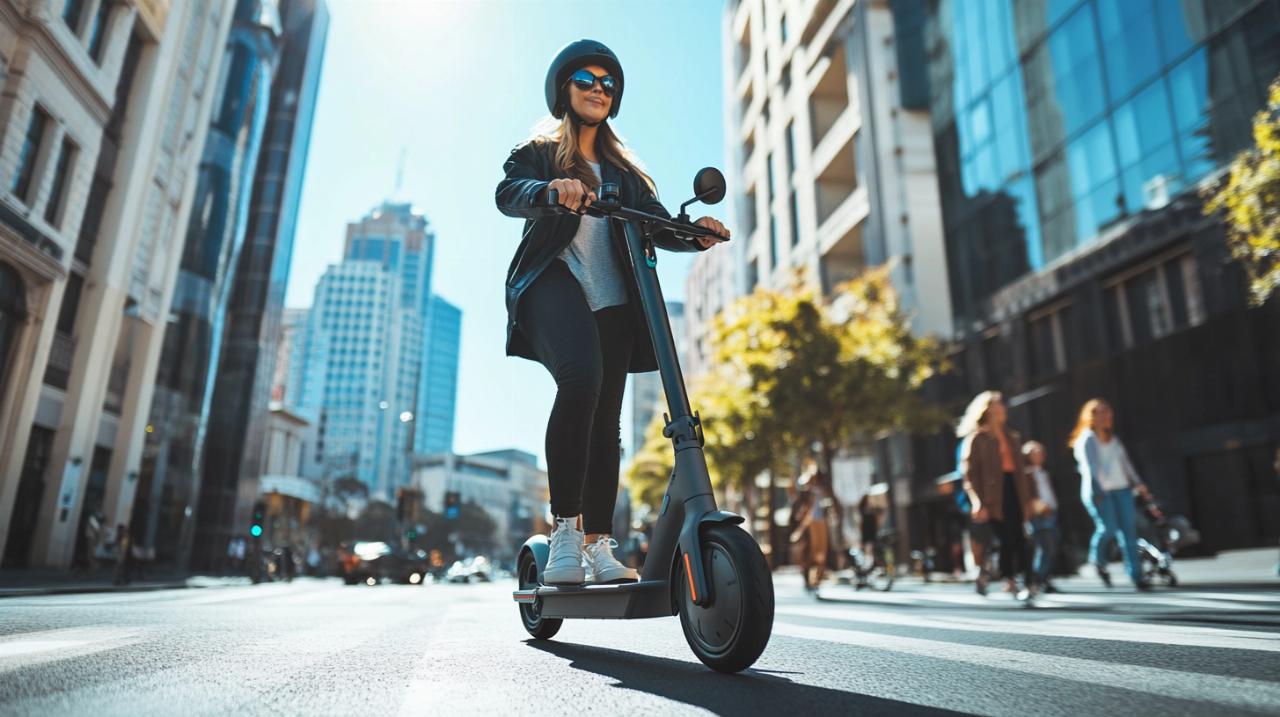
Navigating the bustling streets of London requires a mode of transport that combines efficiency, portability, and reliability. Electric scooters have swiftly emerged as a favoured choice for city dwellers seeking to conquer crowded pavements and integrate seamlessly with public transport networks. Whether you're darting between meetings in Shoreditch or commuting from Clapham to the City, selecting the right electric scooter demands careful consideration of several critical factors. This comprehensive approach ensures that your investment not only meets your daily needs but also delivers long-term satisfaction and value.
Understanding Range and Battery Life for London Commutes
One of the most pivotal aspects when selecting an electric scooter is the range it offers on a single charge. For those traversing the capital, understanding how far your scooter can travel before requiring a recharge is essential. a helpful guide explains that real-world range typically falls between seventy and eighty-five percent of the manufacturer's stated figures due to variables such as rider weight, terrain variations, and weather conditions. If your daily journey involves crossing from one side of London to the other, opting for a model with an advertised range of at least thirty miles ensures you won't find yourself stranded mid-commute. Models such as the i10Plus boast a range of thirty-one miles, powered by a robust battery, making them ideal for longer trips across the city. Meanwhile, the i9 offers a more modest range of eighteen-point-six miles, which remains perfectly adequate for shorter, more localised journeys around neighbourhoods like Islington or Brixton.
Assessing your daily travel distance across the capital
Before committing to a purchase, take time to map out your typical daily routes. Consider whether you'll be using the scooter solely for the last mile from the Tube station to your office or if you plan to rely on it for the entirety of your commute. Those living in outer boroughs such as Richmond or Greenwich may require a scooter with extended range capabilities to ensure they reach central London without anxiety over battery depletion. Conversely, individuals residing closer to the heart of the city might find that a model offering fifteen to twenty miles suffices. Accurately gauging your travel distance prevents the frustration of frequently hunting for charging points and maximises the convenience that electric scooters promise.
Battery Capacity and Charging Times: What You Need to Know
Battery capacity, measured in ampere-hours, directly influences both range and charging duration. Higher capacity batteries, such as the seventeen-point-five ampere-hour unit found in the i10Plus, not only extend your travel distance but also ensure consistent performance over time. Charging times vary significantly between models, with some requiring just a few hours to reach full capacity while others may demand overnight charging. Understanding these nuances allows you to plan your daily routine effectively, ensuring your scooter is always ready when you need it. Additionally, detachable batteries offer the advantage of charging separately from the scooter itself, a feature that proves invaluable for those living in flats without easy access to outdoor power sources.
Portability and Convenience: Folding Mechanisms for Public Transport
London's transport ecosystem thrives on seamless connections between buses, trains, and the Underground. An electric scooter that folds quickly and compactly transforms from a hindrance into an asset during multi-modal commutes. The ability to collapse your scooter in under ten seconds makes boarding a crowded Northern Line carriage far less stressful. Look for models constructed from lightweight aluminium-magnesium alloy, which combine durability with ease of handling. The i9Max, for instance, weighs thirty-four pounds and features a three-second folding mechanism, striking an excellent balance between sturdiness and portability.
Weight Considerations for Carrying on the Tube and Buses
Weight plays a crucial role in determining how practical your scooter will be during daily use. Carrying a scooter up and down station stairs or manoeuvring it onto a bus requires a model that doesn't strain your muscles. Scooters weighing around twelve kilograms, such as the i9, prove manageable for most adults, while heavier options exceeding twenty kilograms can become cumbersome over time. Frequent public transport users should prioritise lighter models, even if it means compromising slightly on features such as battery capacity or motor power. The trade-off often proves worthwhile when you're navigating the labyrinthine corridors of King's Cross St Pancras during rush hour.
Compact design features that make storage a breeze
Beyond folding speed, the dimensions of a collapsed scooter determine how easily it fits into tight spaces. Whether you're stowing it beneath your office desk, tucking it into a corner of your flat, or squeezing it into the boot of a car, compact design features matter immensely. Some premium models, like the Pure Flex, are engineered specifically for minimal footprint when folded, making them ideal for those with limited storage space. Additionally, integrated carrying handles enhance portability, allowing you to move the scooter effortlessly when it's folded. These thoughtful design elements collectively enhance the user experience, transforming what could be a bulky inconvenience into a streamlined companion for urban living.
Motor Power and Performance on London's Varied Terrain
London's topography presents a unique challenge for electric scooter users. While many areas remain relatively flat, neighbourhoods such as Hampstead, Greenwich, and Primrose Hill feature steep inclines that demand adequate motor power. Understanding wattage and how it translates into real-world performance ensures you select a scooter capable of handling your regular routes without faltering.
Tackling Hills Around Hampstead and Greenwich with Adequate Wattage
A three-hundred-and-fifty-watt motor suffices for navigating predominantly flat terrain across central London, but venturing into hillier districts requires more robust output. Models equipped with five-hundred to eight-hundred-watt motors, such as the i10Plus with its eight-hundred-watt motor or the Cocomila V10 Pro with five hundred watts, provide the necessary torque to ascend inclines without draining the battery excessively. Those living near or frequently travelling through areas like Highgate or Dulwich should prioritise scooters with higher wattage to avoid the frustration of sluggish performance on gradients. Conversely, if your commute remains confined to the relatively level streets of Westminster or Canary Wharf, a lower-powered motor will serve you perfectly well while keeping costs down.
Speed Capabilities and Acceleration for City Traffic
While UK regulations cap electric scooter speeds at fifteen-point-five miles per hour on public roads, the quality of acceleration and responsiveness varies between models. A scooter with brisk acceleration allows you to merge confidently into traffic and navigate busy junctions with ease. Premium models often feature multiple riding modes, enabling you to adjust power output according to conditions. Conservative mode preserves battery life during leisurely rides, while sport mode delivers maximum acceleration when you're racing to catch a train. Understanding these options empowers you to tailor performance to your immediate needs, enhancing both safety and enjoyment.
Safety features: brakes, lights, and build quality
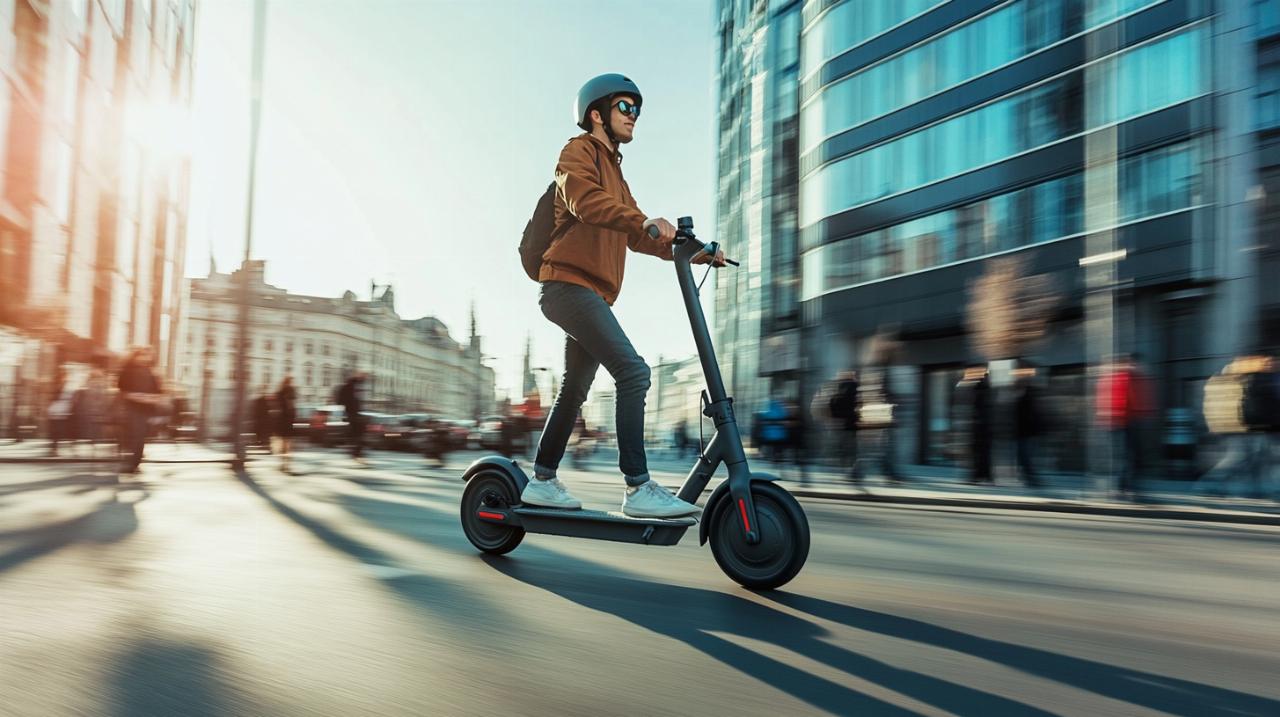
Safety remains paramount when navigating London's bustling streets, where pedestrians, cyclists, and motor vehicles converge. Investing in a scooter equipped with robust safety features protects both you and those around you, reducing the risk of accidents and ensuring compliance with UK regulations.
Why disc brakes are essential for london's busy streets
Reliable braking systems form the cornerstone of electric scooter safety. Dual braking setups, combining electronic and disc brakes, offer superior stopping power compared to single-brake configurations. Disc brakes, in particular, excel in wet conditions, a consideration vital for London's frequently damp climate. Models featuring both front and rear brakes distribute braking force evenly, preventing skidding and maintaining control during emergency stops. The importance of this feature cannot be overstated when you're weaving through traffic on Oxford Street or navigating the narrow lanes of Covent Garden. Always prioritise scooters that incorporate high-quality braking systems, as skimping on this aspect can have serious consequences.
Visibility and Lighting Systems for Night-Time Riding
London's extended winter evenings mean many commutes occur in darkness or reduced visibility. Integrated front and rear lights ensure you remain visible to other road users, a legal requirement that also significantly enhances your safety. Look for scooters with bright LED headlights that illuminate the path ahead, allowing you to spot hazards such as potholes or debris. Rear lights and reflectors alert drivers and cyclists approaching from behind, reducing the likelihood of collisions. Some advanced models incorporate brake lights that activate when you slow down, providing an additional layer of communication with surrounding traffic. Investing in a scooter with comprehensive lighting systems is not merely a matter of convenience but a critical safety measure.
Reading Reviews and Learning from Fellow Londoners' Experiences
Before parting with your hard-earned money, tapping into the collective wisdom of existing users proves invaluable. Reviews provide insights into real-world performance, durability, and customer service experiences that manufacturer specifications cannot convey.
Where to Find Trustworthy Scooter Reviews in the UK
Numerous online platforms host detailed reviews from UK-based riders who share their experiences navigating British roads and weather. Specialist websites dedicated to electric scooters often publish comprehensive buying guides and comparative analyses, rating models based on price, performance, comfort, and practicality. Additionally, forums and social media groups focused on London commuting offer candid discussions where users share both praise and criticisms. Engaging with these communities allows you to ask specific questions about models you're considering and receive tailored advice from individuals with first-hand experience. Trustworthy sources prioritise transparency, clearly outlining both strengths and weaknesses rather than offering one-sided endorsements.
Common praise and complaints about popular models
Recurring themes emerge when examining reviews of popular electric scooters. Lightweight models like the iScooter i9 frequently receive praise for their portability and ease of use on public transport, though some users note that the reduced weight comes at the expense of stability on uneven surfaces. Conversely, heavier, more powerful models such as the JOYOR Y6S earn accolades for their off-road capabilities and robust construction but draw complaints regarding their bulk and difficulty in carrying. Understanding these trade-offs helps you align your choice with your priorities. If portability trumps all else, accept that you may sacrifice some performance features. Conversely, if you prioritise range and power, be prepared to manage a heavier, less manoeuvrable scooter.
Setting a Realistic Budget for Your Electric Scooter Purchase
Electric scooters span a broad price spectrum, with entry-level models starting around one hundred pounds and premium options exceeding nine hundred pounds. Establishing a realistic budget prevents overspending while ensuring you acquire a scooter that meets your essential requirements.
Entry-level versus premium models: what's the difference?
Budget-friendly scooters such as the Todimart T3 at one hundred and seventy-nine pounds offer basic functionality suitable for short, infrequent trips. These models typically feature lower-powered motors, shorter ranges, and simpler construction, making them ideal for casual users or those testing the waters before committing to a larger investment. Mid-range options, priced between two hundred and fifty and five hundred pounds, deliver a significant upgrade in terms of battery capacity, motor power, and build quality. Premium models exceeding six hundred pounds introduce advanced features such as dual suspension, detachable batteries, and superior materials that enhance both comfort and longevity. Assessing which tier aligns with your usage patterns and financial constraints ensures you maximise value without unnecessary extravagance.
Long-Term Value and Maintenance Costs to Factor In
The initial purchase price represents only one component of your total expenditure. Warranties play a crucial role in protecting your investment, with most manufacturers offering twelve-month coverage on scooters and extended periods on components such as batteries. Models with robust warranties signal manufacturer confidence in their products and provide peace of mind should issues arise. Additionally, consider potential maintenance costs, including tyre replacements, brake adjustments, and battery degradation over time. Scooters with pneumatic tyres require more frequent attention compared to solid tyre equivalents, though they offer superior comfort. Factoring these ongoing expenses into your budget ensures you aren't caught off guard by unforeseen costs, allowing you to enjoy your scooter without financial stress.
Navigating UK Laws and Regulations for Electric Scooters
Understanding the legal landscape surrounding electric scooter use in the United Kingdom is essential to avoid fines and ensure your safety. Regulations continue to evolve, reflecting the growing popularity of these devices and the need for clear guidelines governing their use on public roads and pavements.
Current Legal Requirements for Riding on Public Roads and Pavements
As of the latest updates, privately owned electric scooters remain illegal to use on public roads, cycle lanes, and pavements across most of the UK, including London. However, government-sanctioned rental schemes operate in certain boroughs, allowing users to legally ride designated scooters within specified zones. These rental scooters must comply with strict regulations, including speed limits, insurance requirements, and designated parking areas. Riders must be at least sixteen years old and hold at least a provisional driving licence. Privately owned scooters can only be used legally on private land with the owner's permission. Staying informed about these regulations prevents inadvertent violations and ensures you use your scooter responsibly.
Ensuring your scooter meets compliance standards
Should regulations shift to permit private scooter use on public infrastructure, ensuring your model meets compliance standards will become critical. This includes adhering to maximum speed limits, possessing adequate lighting and reflectors, and potentially securing insurance coverage. Even now, prioritising scooters designed with these potential requirements in mind future-proofs your purchase. Models equipped with features such as speed governors, comprehensive lighting systems, and robust build quality position you favourably should the legal framework evolve. Regularly reviewing official government guidance ensures you remain compliant and can enjoy your scooter within the bounds of the law.